From royal taro lands to the world's most famous beach
Fishponds, kings and queens, beach boys, the Pink Palace and statehood — the real story of Waikīkī, told era by era with old photographs.
Waikīkī means spouting or fresh water — for the streams and springs that once soaked this whole plain.
Kamehameha I landed his war canoes here before the Battle of Nuʻuanu and kept Waikīkī as a royal residence.
The Moana opened on March 11, 1901 — still standing on Kalākaua Avenue as the Moana Surfrider.
Dredged to drain the wetlands. Taro patches, rice paddies and fishponds were filled in to make land.
Waikīkī beach boy Duke Kahanamoku won the 100m freestyle in Stockholm and took surfing to the world.
Jet travel and statehood arrived the same year, and Waikīkī's high-rise boom began.
- Before 1795
A land of water, taro and fishponds
Long before hotels, Waikīkī was one of the richest farming areas on Oʻahu. Streams coming down from Mānoa, Pālolo and Makiki valleys spread across the flat land into a huge wetland. Native Hawaiians built a network of loʻi kalo (taro patches) and loko iʻa (fishponds) that fed thousands of people.
The shoreline was a playground for aliʻi (chiefs), who surfed the breaks at Kalehuawehe and other spots offshore. Heiau (temples) such as Papaʻenaʻena stood near the slopes of Lēʻahi — the volcanic cone later called Diamond Head by British sailors who mistook its calcite crystals for diamonds.
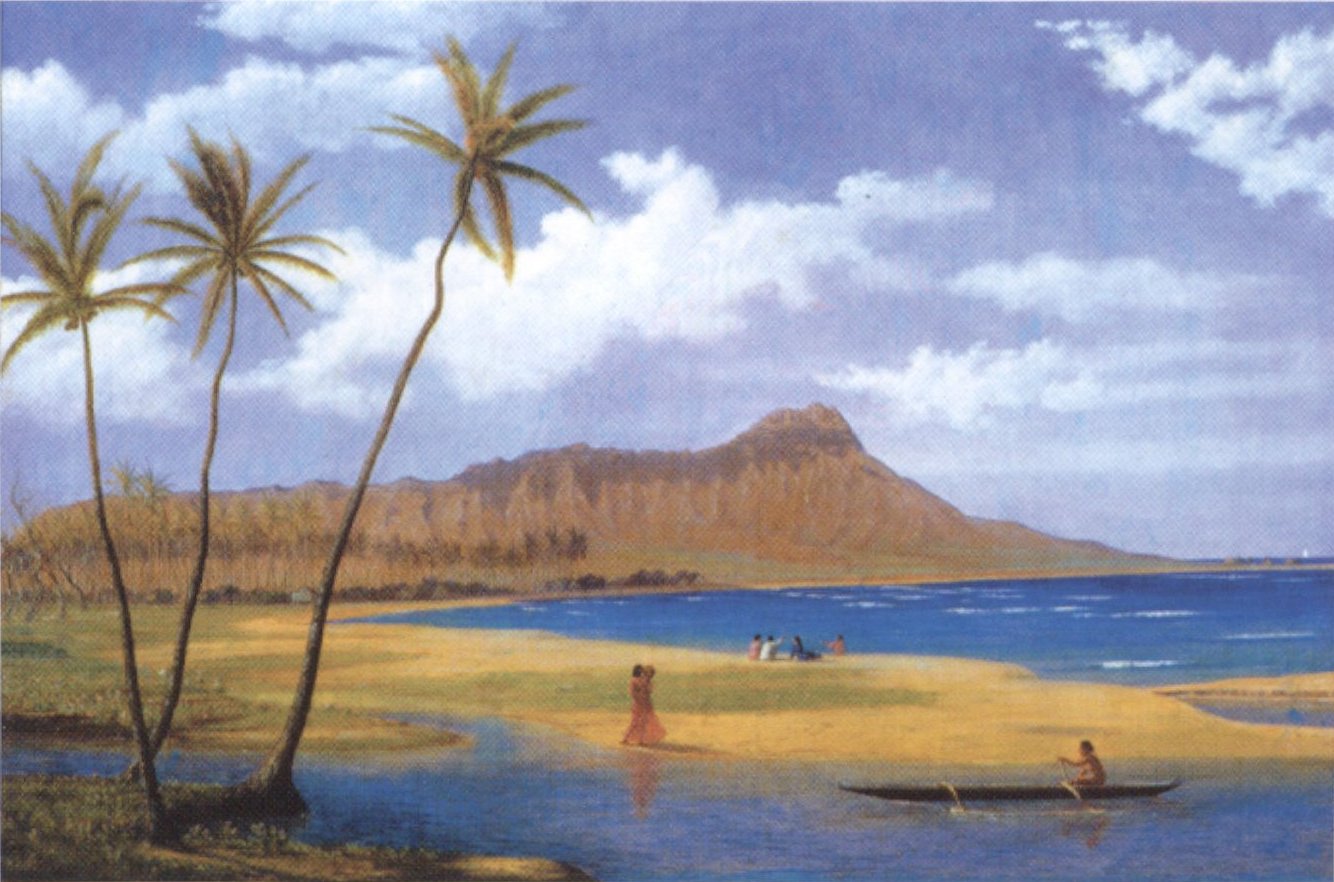
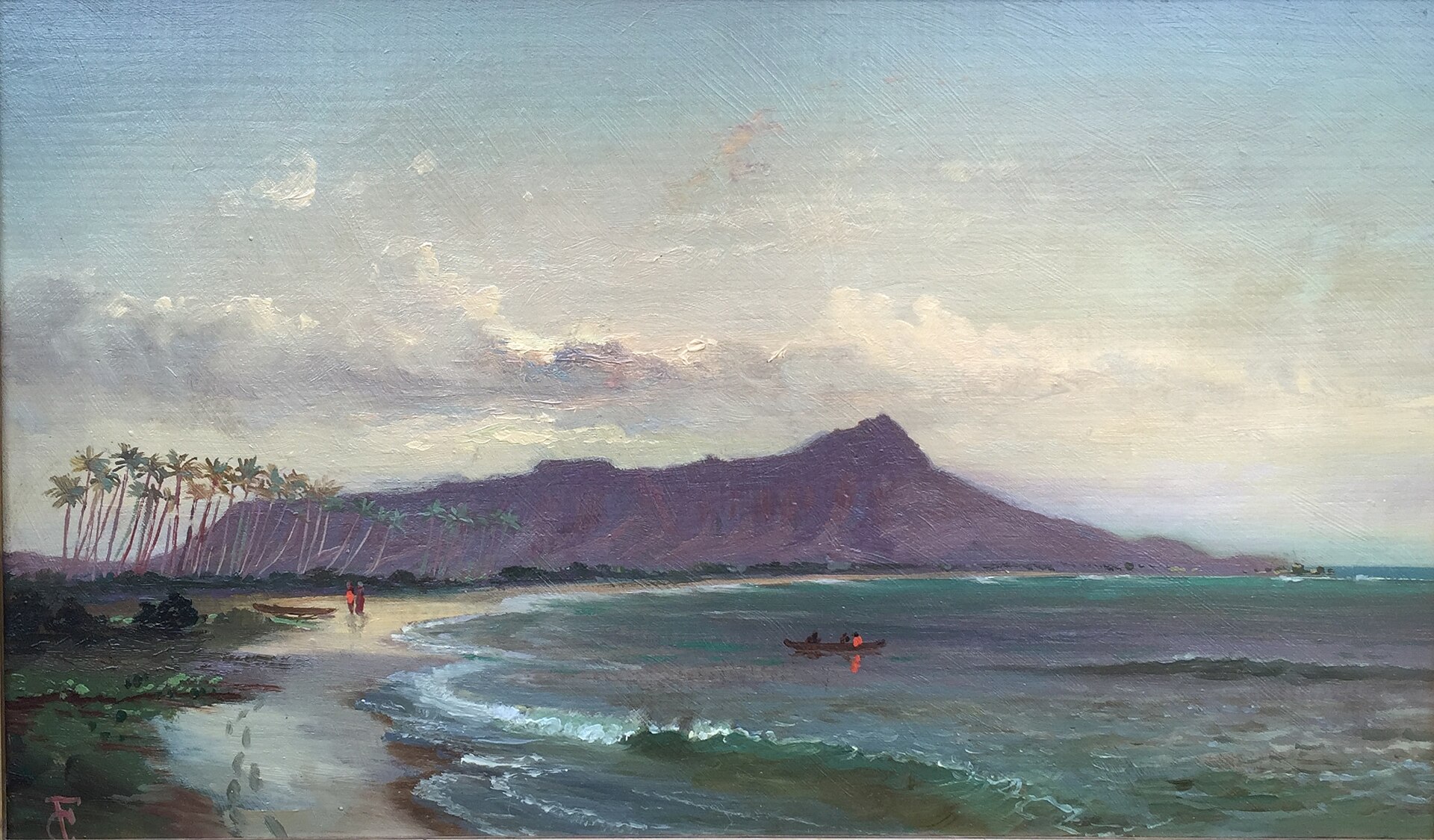
“Diamond Head from Waikīkī,” oil painting, c. 1865Enoch Wood Perry Jr. · Public domain · Wikimedia Commons 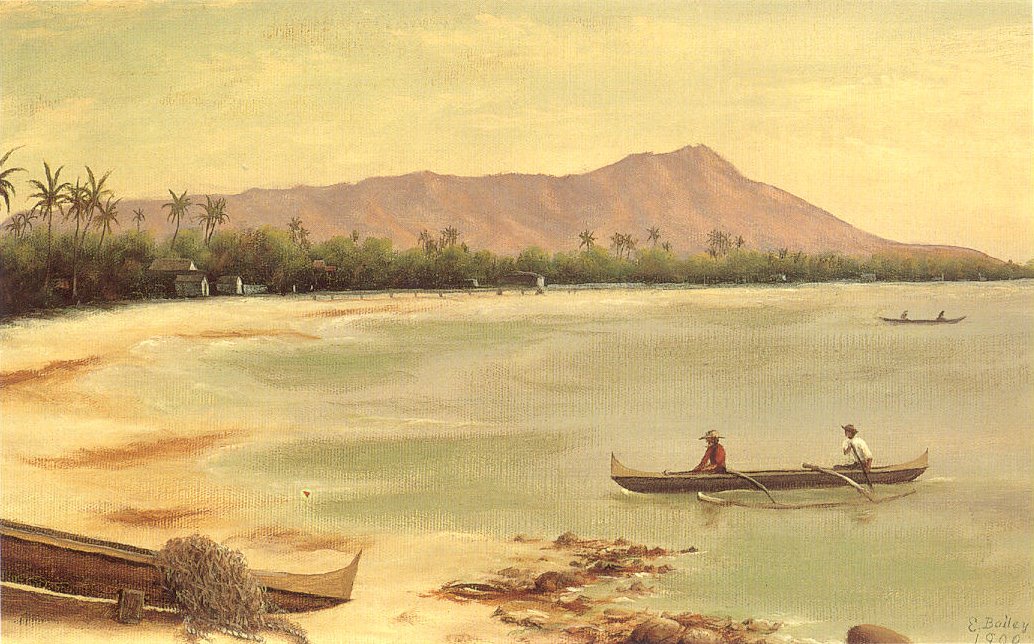
“Canoes at Diamond Head,” 1890Edward Bailey · Public domain · Wikimedia Commons - 1795–1893
The playground of Hawaiian royalty
In 1795 Kamehameha I beached his fleet of war canoes along Waikīkī before marching up Nuʻuanu to unite Oʻahu under his rule. Waikīkī became a royal retreat, and for the next century Hawaiʻi's kings and queens kept homes here among the coconut groves.
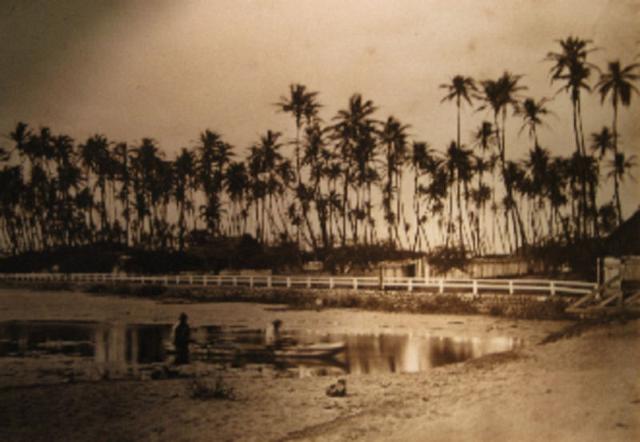
At Helumoa — today the grounds of the Royal Hawaiian Hotel — a grove of some 10,000 coconut trees was said to have been planted by Kākuhihewa. Kamehameha V kept a residence there. Queen Liliʻuokalani had her beach house nearby, and Princess Kaʻiulani grew up at ʻĀinahau, her family's estate full of peacocks and banyan trees.
Kamehameha V's property at Helumoa, Waikīkī, c. 1870Unknown · Public domain · Wikimedia Commons 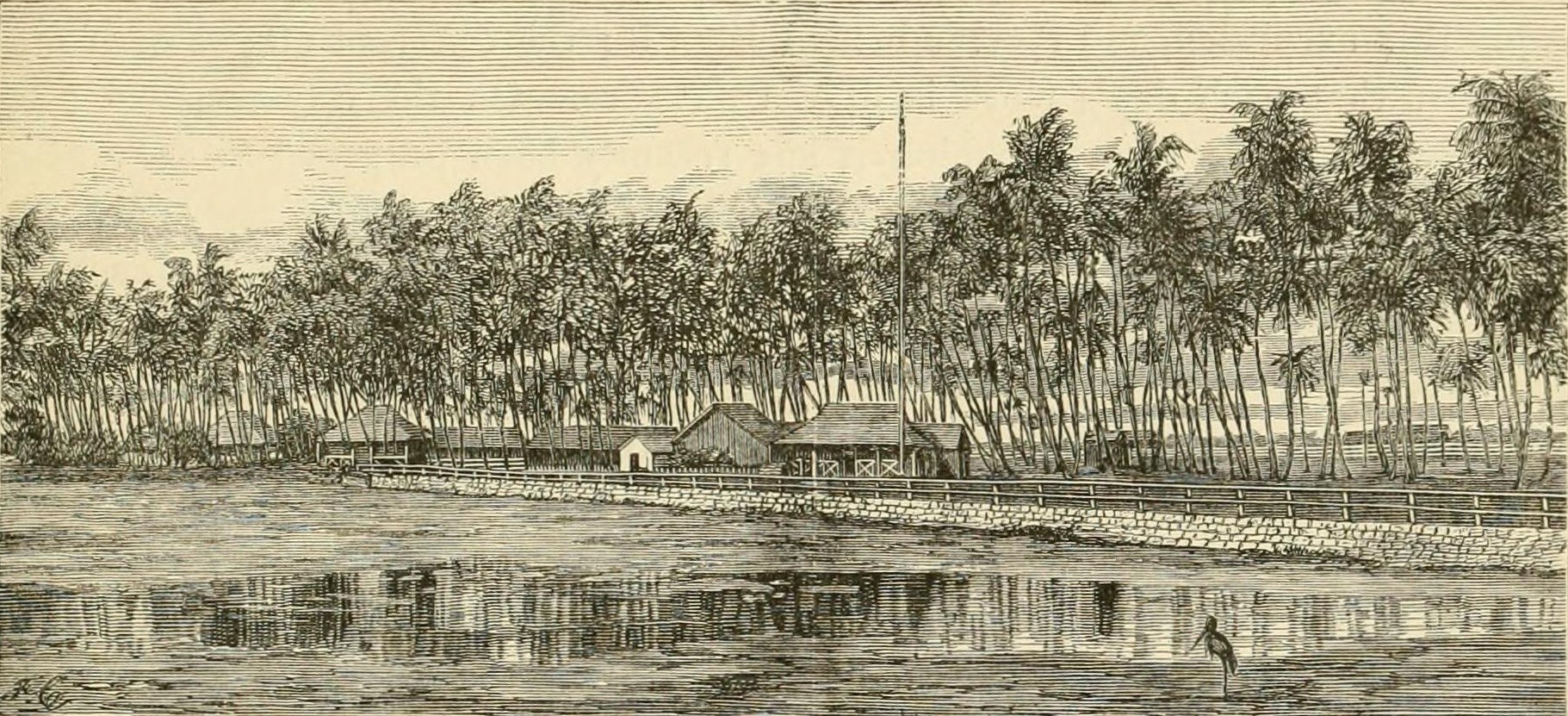
Coconut grove and residence of the late King Kamehameha V at Waikīkī, before 1875Unknown · Public domain · Wikimedia Commons 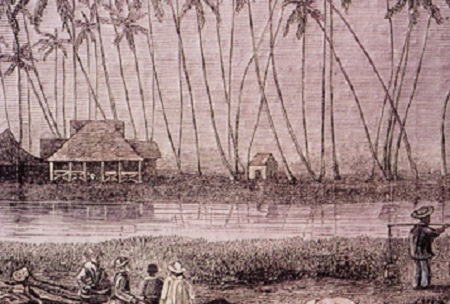
Helumoa's coconut grove with ʻĀpuakēhau Stream in the foreground, 19th centuryUnknown · Public domain · Wikimedia Commons - 1880s–1900
Old Waikīkī, photographed
The first photographs of Waikīkī show a quiet shoreline: grass houses, canoes pulled up on the sand, streams like ʻĀpuakēhau winding through to the sea. A mule-drawn tram, and later an electric streetcar, linked the beach to downtown Honolulu.
King Kalākaua dedicated Kapiʻolani Park, named for his queen, in 1877 — Hawaiʻi's first public park. Hula, banned in public for decades under missionary influence, was revived openly during his reign.
Diamond Head, Waikīkī Beach and Helumoa, c. 1880–85Charles Furneaux · Public domain · Wikimedia Commons 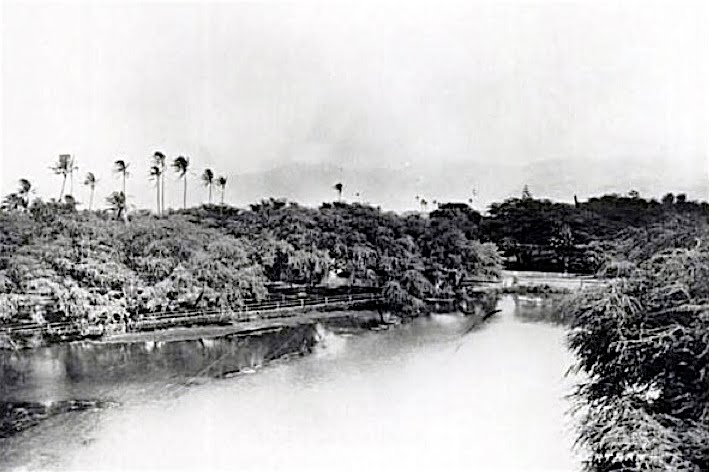
ʻĀpuakēhau Stream, which once ran into the sea at Waikīkī, c. 1890Unknown · Public domain · Wikimedia Commons 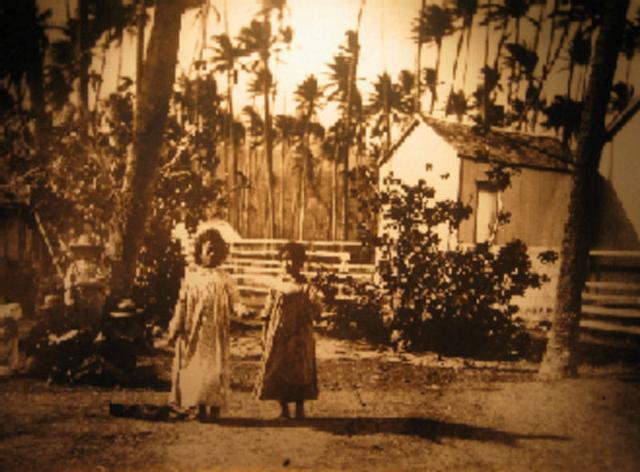
Hawaiian children dancing hula, c. 1890Charles Furneaux · Public domain · Wikimedia Commons - 1901–1927
The first hotels and the beach boys
The Moana Hotel opened in 1901, a grand white colonial building with a pier into the surf, and the age of tourism began. Steamships brought visitors from San Francisco in about five days.
On the beach, Hawaiian “beach boys” taught visitors to surf and paddle outrigger canoes. The most famous was Duke Paoa Kahanamoku, who won Olympic gold in swimming in 1912 and 1920 and became the father of modern surfing, spreading it to California and Australia.
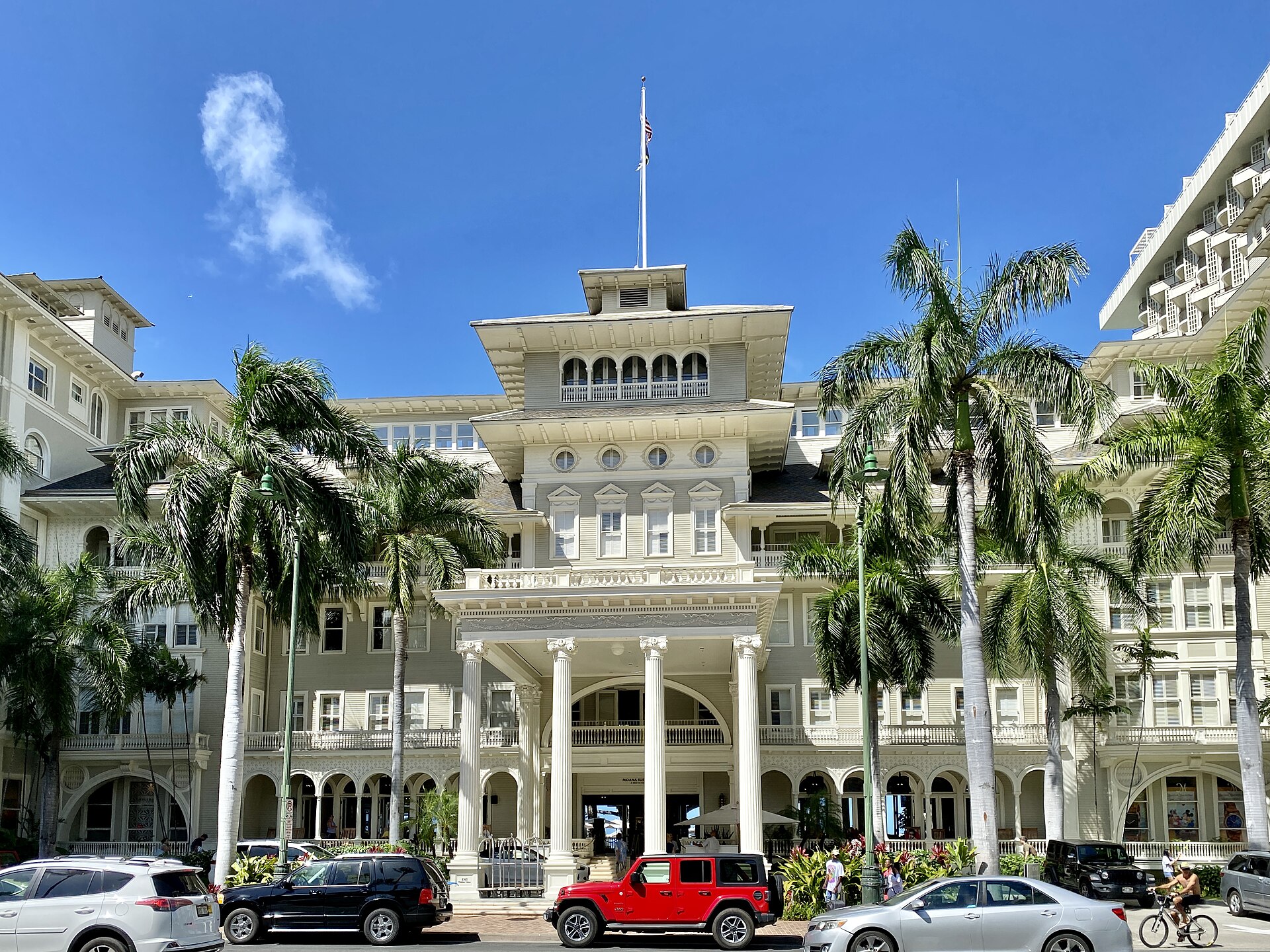
The Moana, Waikīkī's first hotel, opened March 11, 1901w_lemay · CC BY-SA 2.0 · Wikimedia Commons 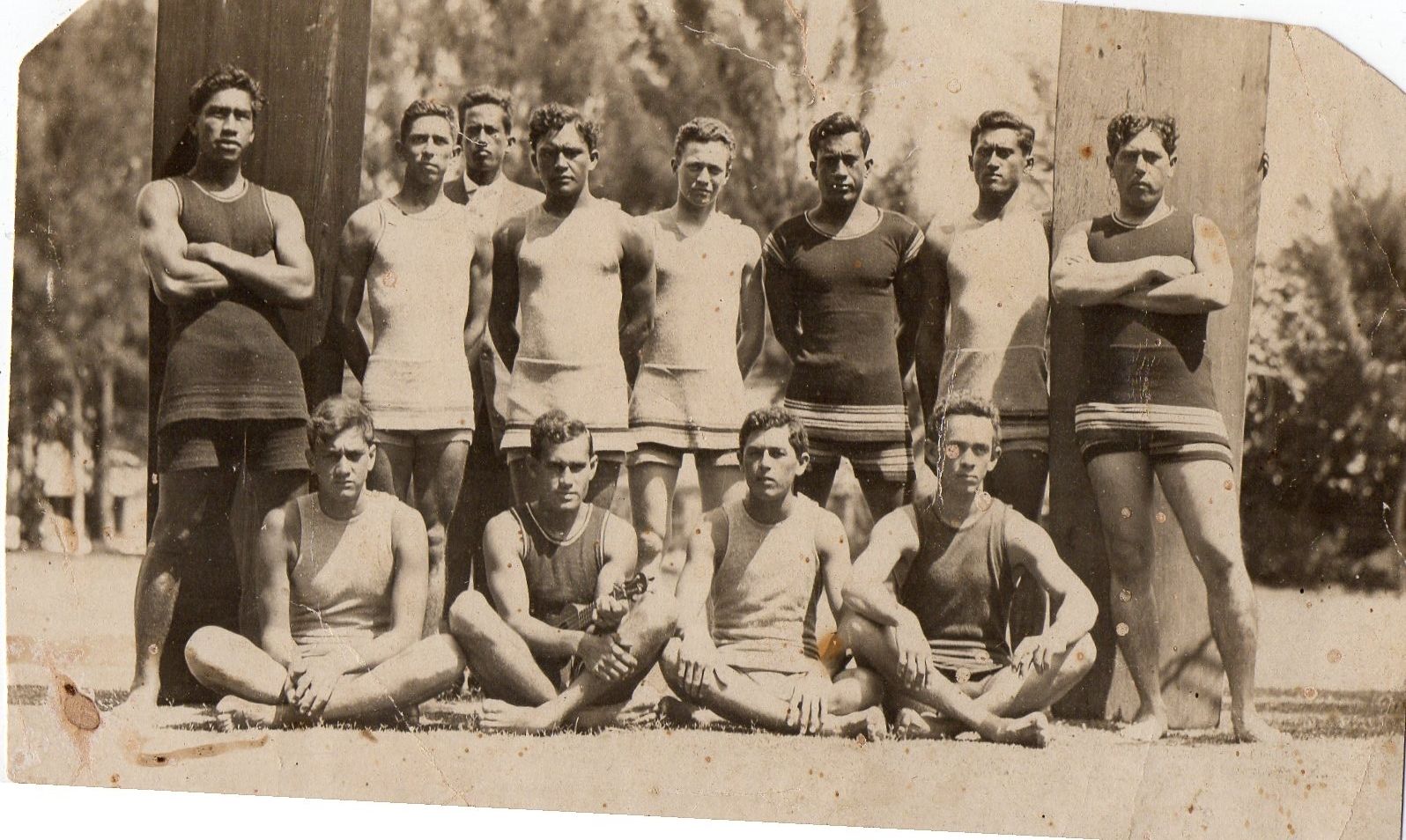
Duke Kahanamoku, c. 1910Unattributed · Public domain · Wikimedia Commons 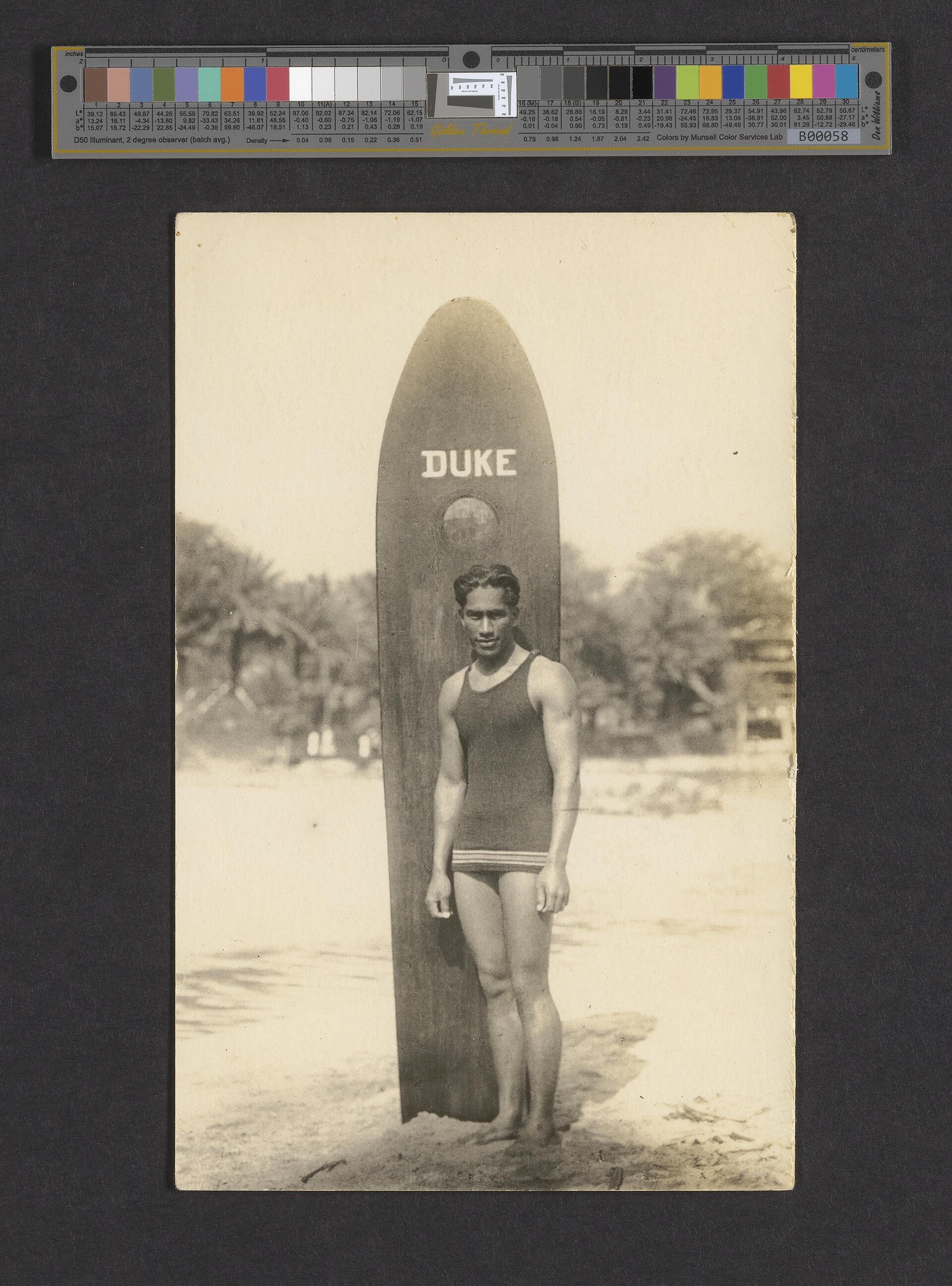
Duke Paoa Kahanamoku with his surfboard, c. 1910–15Unknown · Public domain · Wikimedia Commons - 1921–1941
The Ala Wai and the Pink Palace
Between 1921 and 1928 the Ala Wai Canal was dug to drain the wetlands. It cut off the streams from the sea, and the taro patches, rice paddies and duck ponds of old Waikīkī were filled in with the dredged soil. In a few years, a farming district became land ready for building.
In 1927 the Royal Hawaiian Hotel opened on the old royal grounds at Helumoa. Painted pink and styled like a Spanish-Moorish palace, it hosted movie stars and millionaires who arrived on Matson's luxury liners. The radio show “Hawaii Calls” broadcast from the Moana's banyan courtyard from 1935.
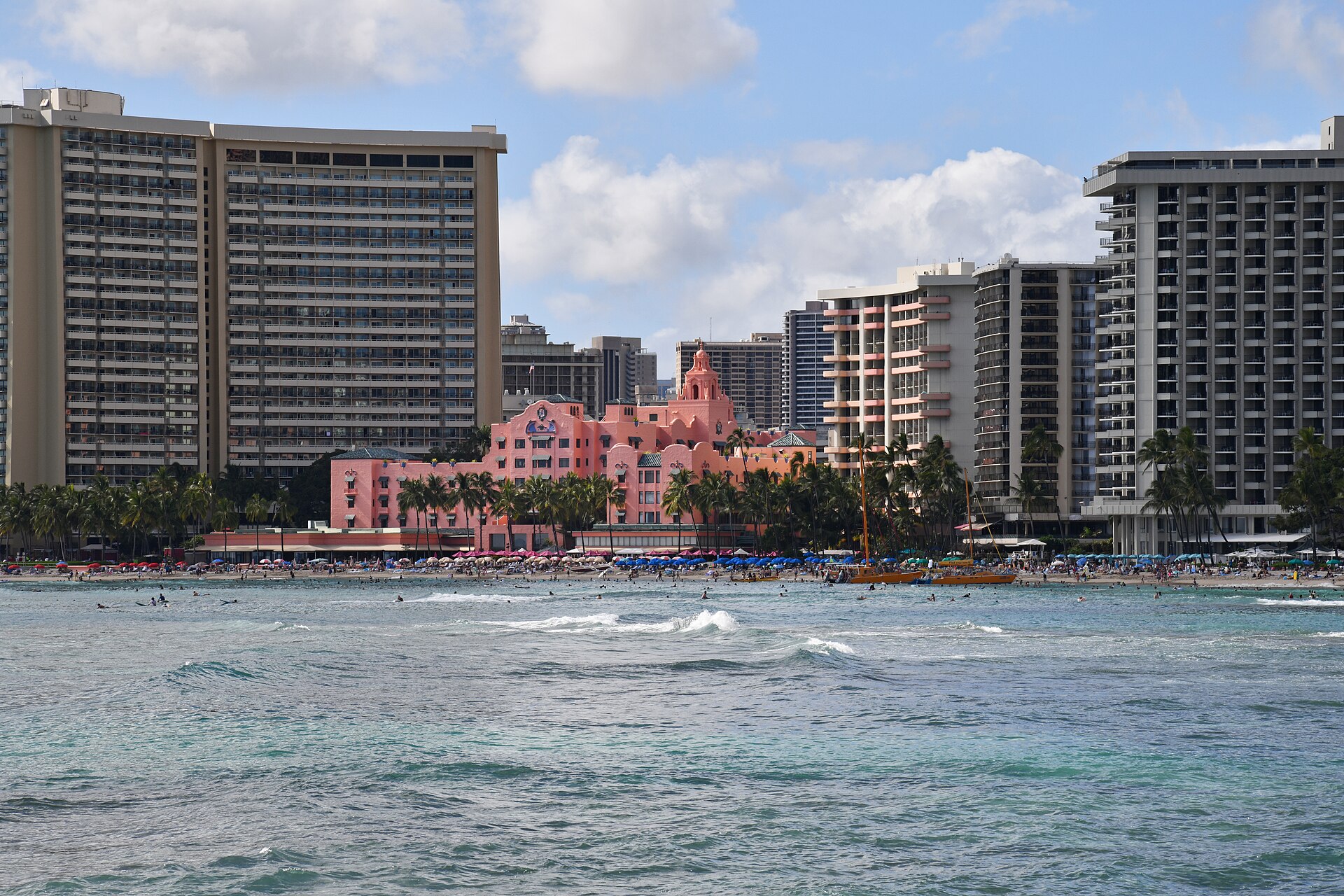
The Royal Hawaiian, the “Pink Palace of the Pacific,” opened 1927Seagerthomas · CC BY-SA 4.0 · Wikimedia Commons - 1941–1959
War years and statehood
After the attack on Pearl Harbor in 1941, Waikīkī was strung with barbed wire, and the Royal Hawaiian was leased to the U.S. Navy as a rest home for sailors and submarine crews. Fort DeRussy, an Army post since 1908, sat in the middle of the beach.
When Hawaiʻi became the 50th state on August 21, 1959 — the same year jet airliners began flying from the mainland — visitor numbers exploded. Hotels went up block after block along Kalākaua Avenue.
- 1960–today
The Waikīkī we know
Today Waikīkī welcomes millions of visitors a year, but its history is still underfoot. The Moana and Royal Hawaiian still stand. A bronze statue of Duke Kahanamoku greets surfers at Kūhiō Beach, where torches are lit at sunset and free hula shows are held. Historic markers along the Waikīkī Historic Trail tell the story of the royal estates, streams and fishponds beneath the streets.
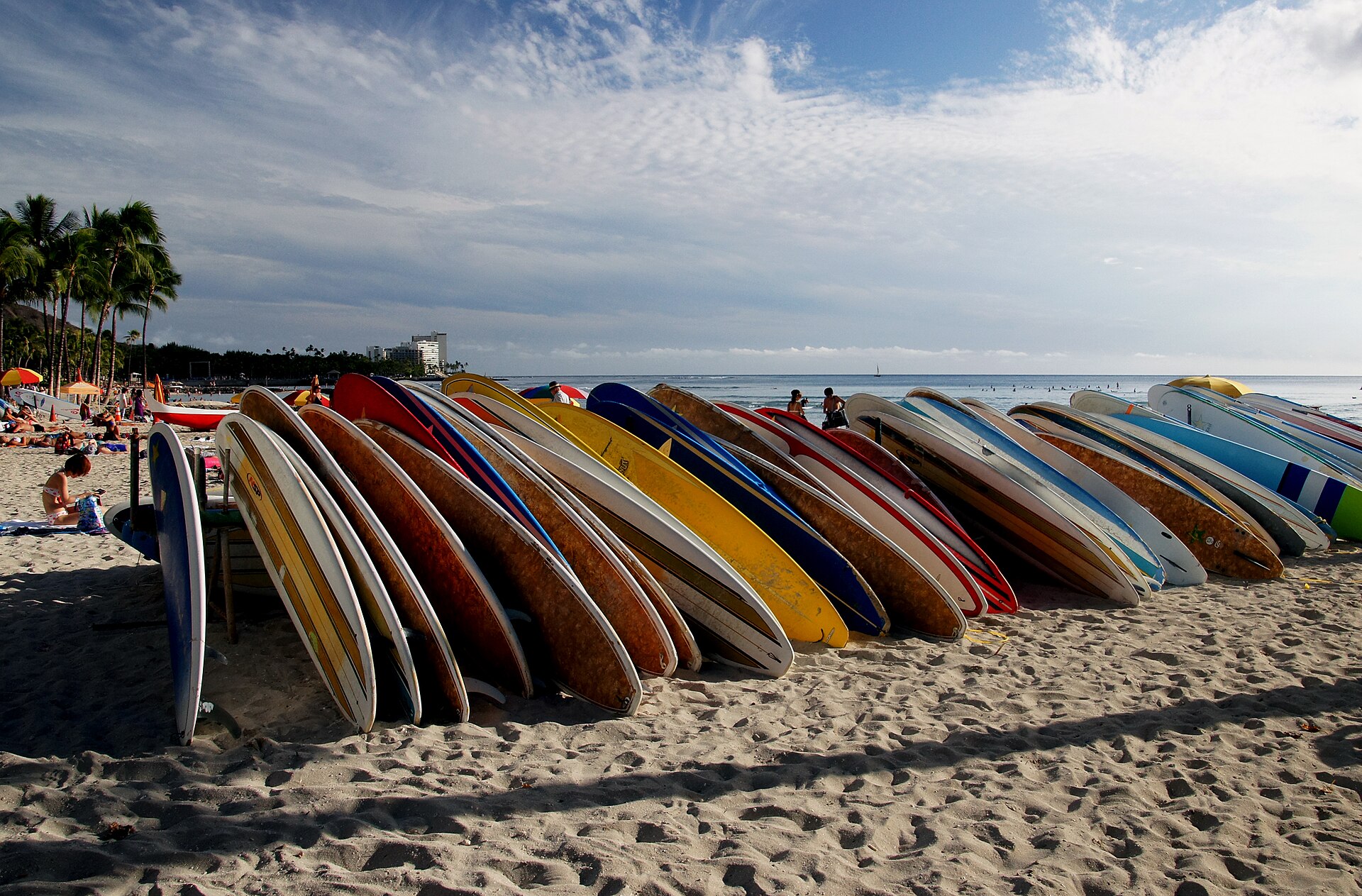
Surfboard racks on Waikīkī Beach today — Duke's legacy in the sandBernard Spragg · CC0 · Wikimedia Commons
Old Waikīkī on film
Real historic footage and a documentary showing Waikīkī the way it looked long ago.
The History of Waikīkī (1989)
A classic PBS Hawaiʻi documentary on Waikīkī's journey from wetlands and royal retreats to a world resort.
PBS Hawaiʻi · Watch on YouTube1926 film — tourists on Waikīkī Beach
Nearly 100-year-old footage of swimmers, surfers and visitors on the sand in the 1920s.
PeriscopeFilm · Watch on YouTube1930s home movie: Aloha Tower, Waikīkī Beach, Diamond Head
Arriving on the Matson liner Lurline, lei greetings, and the Royal Hawaiian on the shore.
PeriscopeFilm · Watch on YouTube1940s Honolulu: Waikīkī Beach surfing (Castle Films)
Surfers, outrigger canoes, hula and Duke Kahanamoku in a 1940s travelogue.
PeriscopeFilm · Watch on YouTubeSee the history for yourself
Visit the Duke Kahanamoku statue at Kūhiō Beach, have a drink under the Moana's banyan tree, and walk the Waikīkī Historic Trail's surfboard-shaped markers.
All photos from Wikimedia Commons — tap any caption for the original and its license.